What it covers
-
01
Operations map
The operations map is a reading path: mental model, start-up, quote and order flow, algo notes and a safe-edit order. It sits in the same nav as the live consoles.
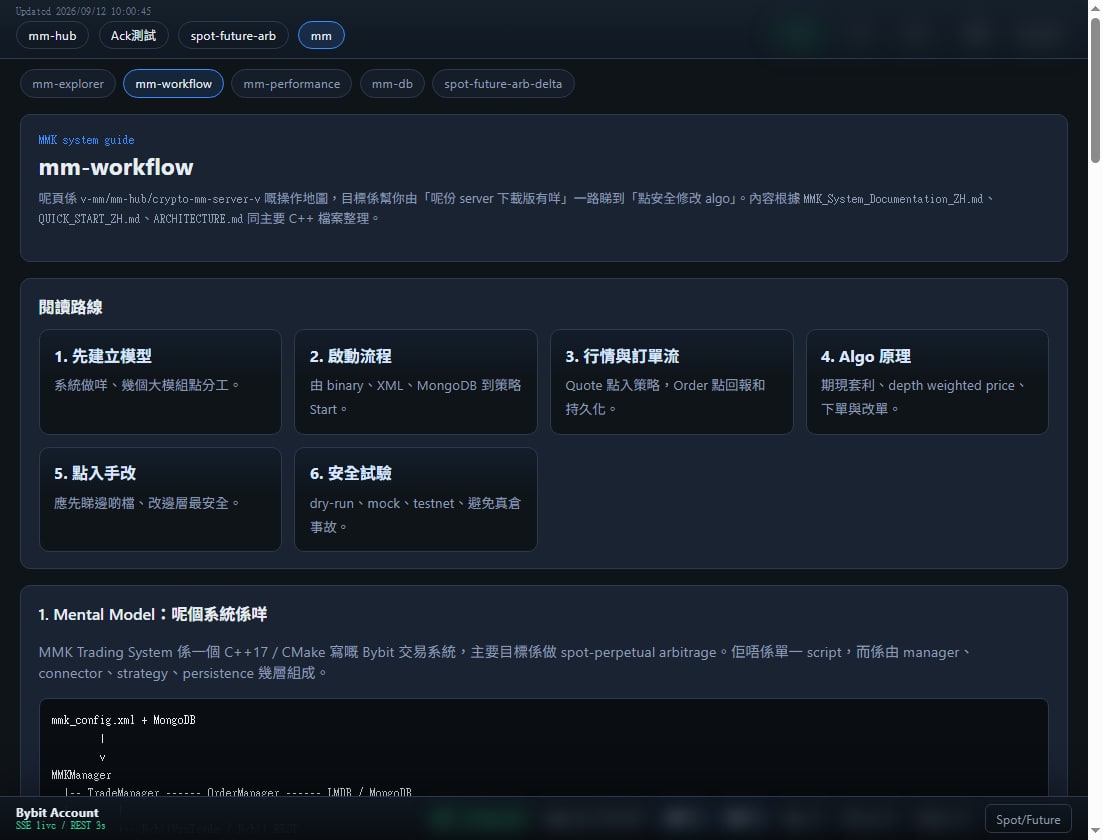
Operations map: reading path from mental model to a safe edit. Account chips are blurred. -
02
Fleet console
The fleet table lists each instance — running or not, live or dry, basis, open orders, fills. Start, stop and a holdings strip share the page. API keys and balances on the published screens are empty or blurred.
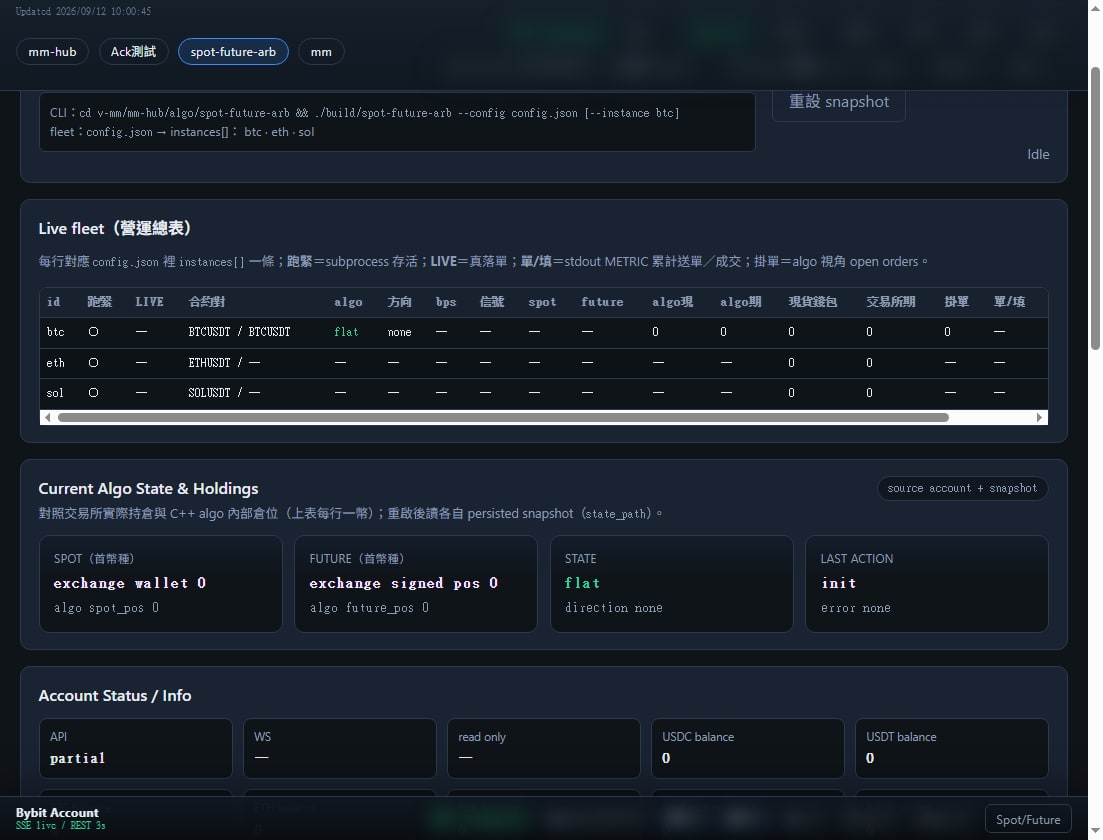
Fleet table for BTC, ETH and SOL: running flag, live flag, basis and orders. Balances are empty or blurred. -
03
Ack desk
Python, Rust and C++ wrappers start the same performance binary. The desk shows duration, a live-account confirm and a comparison table. The target on the page is on-order p50 under 20 ms; that is a target, not a published result.
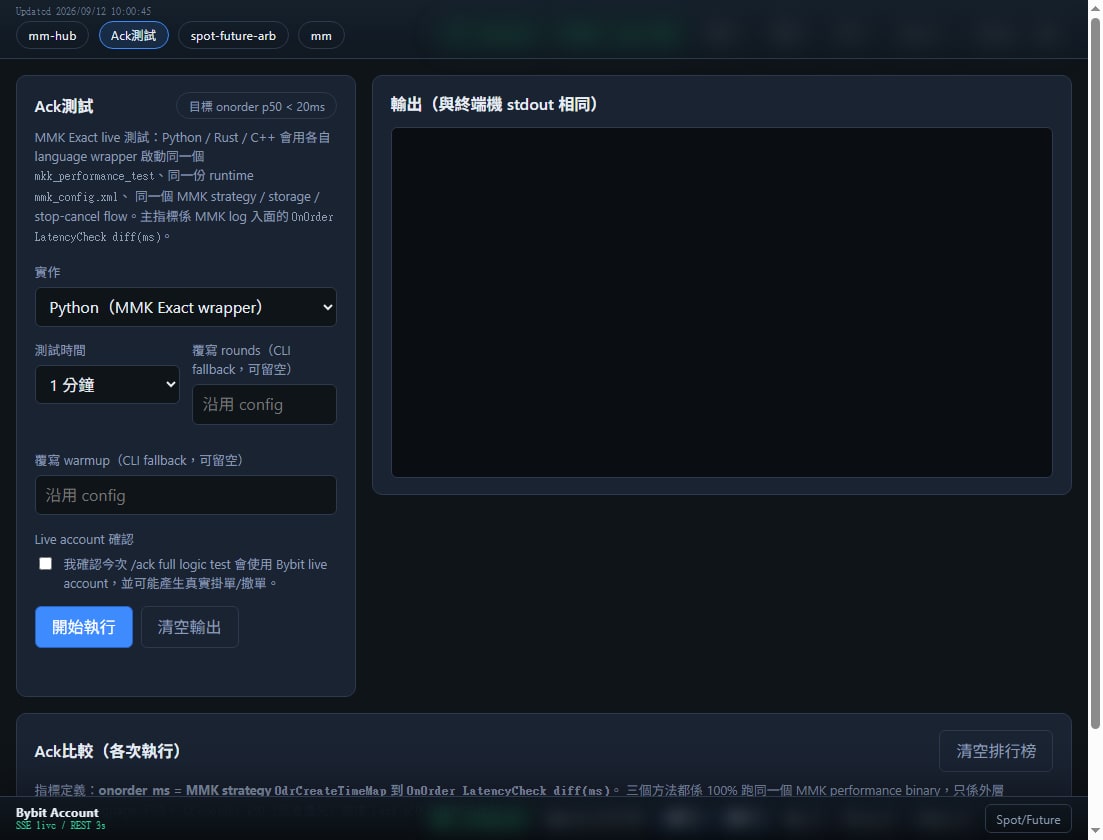
Ack desk: wrapper, duration and comparison pane. Local paths are hidden.
The problem
The engine, configs, strategy parameters and latency tests were reached over SSH and separate scripts. Seeing which symbol was running, whether it was live, and what the last ack run showed meant assembling several sessions.
How it was built
The engine is C++17: exchange WebSocket and REST, LMDB for local order state, MongoDB for instruments and parameters. The browser hub is a FastAPI app with static pages. The arb page starts one subprocess per symbol from a shared config. The ack desk runs the same performance binary behind Python, Rust and C++ wrappers and ranks on-order latency.
What changed
Operators start and stop the fleet, read pair state and run ack comparisons from one hub. The workflow page keeps the mental model and the safe-edit path next to the controls.